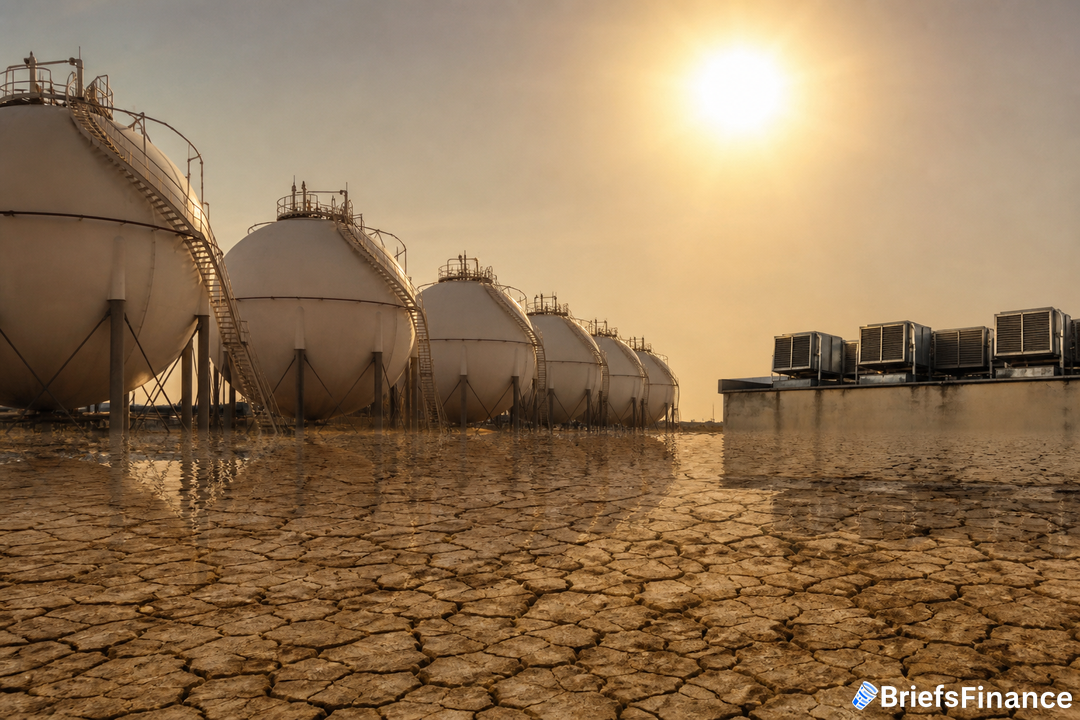
A relentless heat wave across the southern U.S. is driving record electricity demand and bolstering natural gas consumption for power generation. Despite this surge in demand, Henry Hub natural gas prices remain largely subdued due to a persistent supply glut, particularly from the Permian Basin.
This dynamic is critical for energy markets as it underscores the structural challenges facing U.S. natural gas pricing, even amidst peak seasonal demand. The interplay of robust shale gas production, infrastructure developments, and the growing influence of renewable energy sources is creating a complex market environment that impacts producers' profitability and consumers' energy costs.
Executive Summary
While Texas grid operators anticipate peak power demand to surpass July records daily through Tuesday, natural gas futures settled at $2.773 per million British thermal units on August 23, 2026. New pipeline capacity has eased bottlenecks in the Permian Basin, allowing increased gas flows that are now weighing on the Henry Hub benchmark in southern Louisiana. This divergence highlights how regional infrastructure and associated gas production from oil drilling continue to shape pricing dynamics, even as high temperatures typically drive up gas demand.
What Happened
A prolonged heat wave has gripped the southern U.S., pushing electricity demand to record levels and increasing natural gas consumption for cooling. Simultaneously, new pipeline infrastructure has facilitated greater natural gas egress from the Permian Basin. This increased supply, much of it associated gas from profitable oil drilling, is contributing to a supply glut that is suppressing Henry Hub prices.
Key Developments
- Henry Hub Under Pressure: Natural gas futures settled at $2.773/MMBtu on August 23, 2026, despite strong demand from a U.S. heat wave.
- Permian Supply Glut: Increased gas flows from the Permian Basin, facilitated by new pipeline capacity, are weighing on the Henry Hub benchmark.
- Regional Price Divergence: While West Texas sees firming prices due to pipeline capacity, Henry Hub faces downward pressure from rising Permian gas flows.
Regional Context
The U.S. natural gas market is experiencing a significant regional divergence, with infrastructure developments in West Texas impacting national benchmarks. This highlights the ongoing evolution of North American energy trade and the critical role of pipeline capacity in connecting production hubs to demand centers.
Market Impact
For natural gas traders, the persistent supply overhang from associated Permian gas means that even strong seasonal demand may not trigger significant price rallies, necessitating a focus on regional basis differentials. Refiners, particularly those with integrated gas operations, benefit from lower fuel costs, while analysts must closely monitor infrastructure build-out and the increasing influence of renewables on power burn to accurately forecast Henry Hub movements.
Outlook
The market will closely watch for any sustained shifts in production discipline or further increases in LNG feedgas demand to absorb the current glut. However, with Permian oil economics remaining strong, associated gas production is likely to continue exerting downward pressure on Henry Hub in the near term.