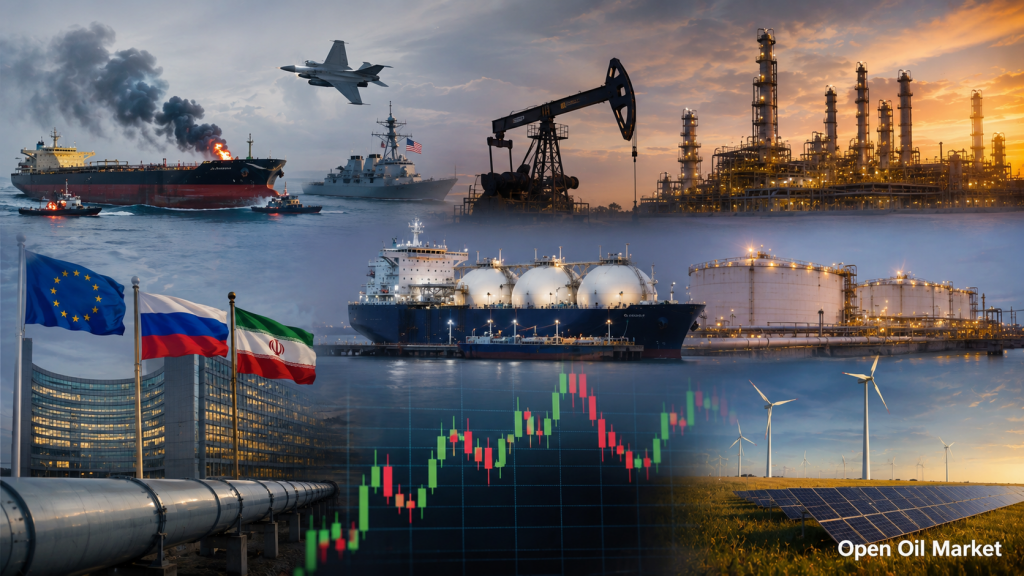
European gas prices at the TTF hub have surged by approximately 50% over three weeks, driven by escalating geopolitical tensions including a 'mining war' in the Strait of Hormuz. Concurrently, the European Union has approved its 21st sanctions package against Russia, further tightening restrictions on its energy sector.
This confluence of events has pushed the global energy market into its most critical phase since spring 2026, forcing investors and market participants to reassess fundamental scenarios from freight pricing to electricity production costs across Europe and Asia.
Executive Summary
The European gas market faces significant vulnerability as TTF benchmark contracts exceeded €62 per MWh on July 22, marking a nearly 50% increase from late June. This surge is primarily attributed to the disruption of LNG flows through the Strait of Hormuz and heightened competition for spot LNG cargoes between Europe and Asia. Simultaneously, the EU's 21st sanctions package freezes the Russian oil price cap for a year and targets Russia's refining capacity and 'shadow fleet,' aiming to curb Moscow's energy revenues amidst the market instability.
What Happened
On July 23, Brent crude prices surpassed $101 per barrel following an oil tanker explosion in the Strait of Hormuz and Iran's statement that the critical waterway would remain closed. Simultaneously, the European Union formally approved its 21st sanctions package against Russia, which includes freezing the oil price cap at approximately $44 per barrel for one year.
Key Developments
- TTF Prices Soar: European TTF gas prices jumped approximately 50% over three weeks, exceeding €62 per MWh by July 22.
- Hormuz Disruption: An oil tanker explosion and Iran's threat to close the Strait of Hormuz triggered a sharp rise in global oil prices and disrupted LNG flows.
- EU Sanctions Package: The EU approved its 21st sanctions package against Russia, freezing the oil price cap and targeting refining, the 'shadow fleet,' and banking transactions.
Regional Context
The European gas market is in its most vulnerable position in several years, with storage injection rates lagging the five-year average by over 15 percentage points, making a winter price peak virtually inevitable.
Market Impact
Traders, refiners, and analysts must now account for a significantly altered landscape, with increased freight and insurance costs, heightened competition for spot LNG cargoes, and the enforcement of new EU sanctions impacting Russian oil and product flows. The frozen oil price cap at $44 per barrel means Russia will not benefit from the current spike in global quotes.
Outlook
The market will closely watch the restoration of capacities at Russian refineries, the duration of Russia's export ban on gasoline and diesel, and the enforcement of the EU's 21st sanctions package, particularly concerning the shadow fleet and banking transactions.