Indonesia has officially commenced construction on the long-delayed Abadi Masela liquefied natural gas (LNG) megaproject, marking a pivotal moment for the nation's energy landscape after nearly three decades of uncertainty. This significant milestone is set to bolster Indonesia's domestic energy security and reshape its role in the regional LNG market amidst volatile global supply chains.
The groundbreaking of the Abadi Masela project is crucial now as global energy markets prioritize supply chain resilience and cleaner energy sources. With a substantial portion of its output earmarked for domestic consumption, the project directly addresses Indonesia's long-standing reliance on imported fuels and positions it as a more self-sufficient energy player, while also contributing to regional supply stability.
Executive Summary
After almost 30 years of planning and delays, Indonesia has initiated the construction phase of the Abadi Masela LNG project, a $21 billion investment located in the Masela Block in eastern Indonesia. Operated by Japan's INPEX Corporation, in partnership with Indonesia's Pertamina and Malaysia's Petronas, the megaproject is designed to produce 9.5 million tonnes of LNG and 150 million standard cubic feet of gas per day (MMSCFD), along with 35,000 barrels of condensate. This development is a strategic national project aimed at strengthening domestic energy security, attracting long-term investment, and accelerating economic growth in eastern Indonesia.
What Happened
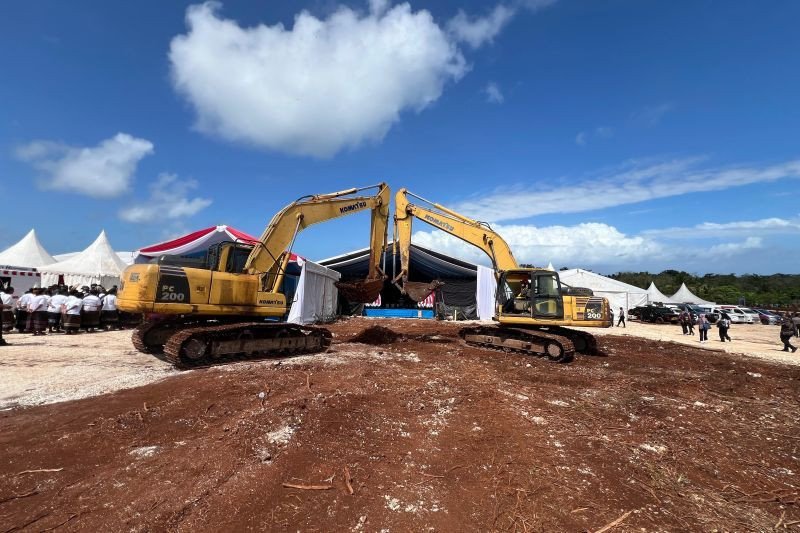
President Prabowo Subianto virtually launched the Abadi Masela LNG project's groundbreaking ceremony on Thursday, July 16, 2026, from Jakarta, with a simultaneous event at the site in the Tanimbar Islands, Maluku. This official start of construction follows decades of regulatory changes and development plan revisions that had stalled the project since its initial contract signing in 1998. Energy and Mineral Resources Minister Bahlil Lahadalia confirmed that 60% of the LNG output would be allocated to meet domestic needs.
Key Developments
- Decades of Delay End: The Abadi Masela LNG project, conceived in the late 1990s, finally broke ground on July 16, 2026, after nearly three decades of planning and regulatory hurdles.
- Significant Production Capacity: The project is set to yield 9.5 million tonnes of LNG per year, 150 MMSCFD of gas, and 35,000 barrels of condensate, making it one of Indonesia's largest gas developments.
- Domestic Market Focus: Approximately 60% of the liquefied natural gas produced from the Abadi field will be directed to Indonesia's domestic market, prioritizing downstream industries.
Regional Context
The Abadi Masela project, located in the Arafura Sea near the Indonesia-Australia maritime border, is a cornerstone of Indonesia's strategy to enhance its energy independence and stimulate economic development in its eastern provinces. This move is particularly significant for the Asia-Pacific region, where energy security and diversified supply chains are increasingly critical amid geopolitical shifts and evolving demand patterns.
Market Impact
For traders and analysts, the Abadi Masela project's progress signals a substantial new source of LNG supply coming online around 2029-2030, potentially influencing regional spot prices and long-term contract dynamics. Refiners and industrial players in Indonesia will benefit from a more secure and expanded domestic gas supply, reducing reliance on imports and supporting industrial growth, particularly in sectors like fertilizer production. The integration of carbon capture and storage technology also sets a precedent for future large-scale energy developments in the region, impacting environmental compliance and investment considerations.
Outlook
With construction now underway, the focus shifts to efficient project execution to meet the targeted production start between 2029 and 2030. Future developments will hinge on the project's ability to maintain its timeline and successfully integrate its significant output into both domestic and international markets, solidifying Indonesia's position as a key regional energy player.