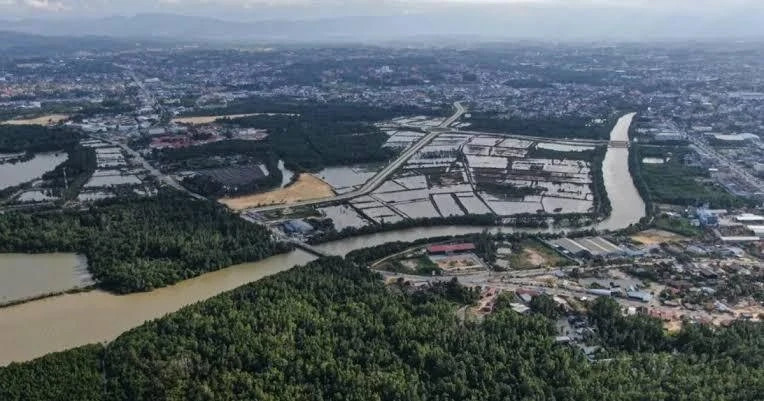
Indonesia officially launched its forestry carbon trading ecosystem on July 6, marking a significant stride in developing its national carbon market as a new engine for economic growth. The inaugural issuance saw approximately 31 million tonnes of carbon dioxide equivalent (CO₂e) credits, signaling Jakarta's commitment to green development and climate finance mobilization.
This development is crucial for Asian energy markets as it establishes a tangible mechanism for carbon pricing and trading within a major regional economy, potentially influencing investment flows into low-carbon projects and setting a precedent for other ASEAN nations. It underscores the growing integration of climate policy with economic strategy, offering new avenues for revenue generation and emissions reduction.
Executive Summary
Indonesia's government has operationalized its national carbon market, with the formal handover of forestry carbon credits taking place on July 6, ahead of the Carbon Unit Registry System (SRUK) launch on July 9. This initiative is projected to generate a total transaction value of 5 trillion IDR (approximately 277.52 million USD) and 500 billion IDR in non-tax state revenue. Forestry Minister Raja Juli Antoni emphasized the market's role in achieving 8% economic growth through green development, balancing economic and ecological objectives.
What Happened
On July 6, 2026, Indonesia formally launched its forestry carbon trading ecosystem, issuing around 31 million tonnes of CO₂e credits. This precedes the official launch of the Carbon Unit Registry System (SRUK) on July 9, which will serve as the primary infrastructure for the national carbon market. The Ministry of Forestry will facilitate the release of credits to three Forest Utilisation Business Permit holders and one social forestry entity.
Key Developments
- Market Launch: Indonesia officially launched its forestry carbon trading ecosystem on July 6, 2026.
- Credit Issuance: An inaugural issuance of approximately 31 million tonnes of CO₂e credits was made.
- Economic Impact: The market is estimated to generate 5 trillion IDR in transaction value and 500 billion IDR in non-tax state revenue.
Regional Context
The launch positions Indonesia as a leader in Southeast Asia's burgeoning carbon market landscape, following similar policy developments in Vietnam and aligning with broader ASEAN goals for an interoperable carbon market. This regional push aims to mobilize green finance and strengthen climate commitments across the bloc.
Market Impact
For traders and analysts, Indonesia's new carbon market introduces a significant new asset class and regulatory framework, offering opportunities in forestry-based carbon credits. Refiners and other industrial players in the region may face future compliance obligations or see new avenues for offsetting emissions, influencing investment decisions in decarbonization technologies and sustainable practices. The market's success could also spur further development of carbon pricing mechanisms across Asia.
Outlook
The full operationalization of the Carbon Unit Registry System on July 9 will be a key milestone, with market participants closely watching transaction volumes and pricing signals to gauge the market's maturity and its long-term potential to attract global climate finance.